
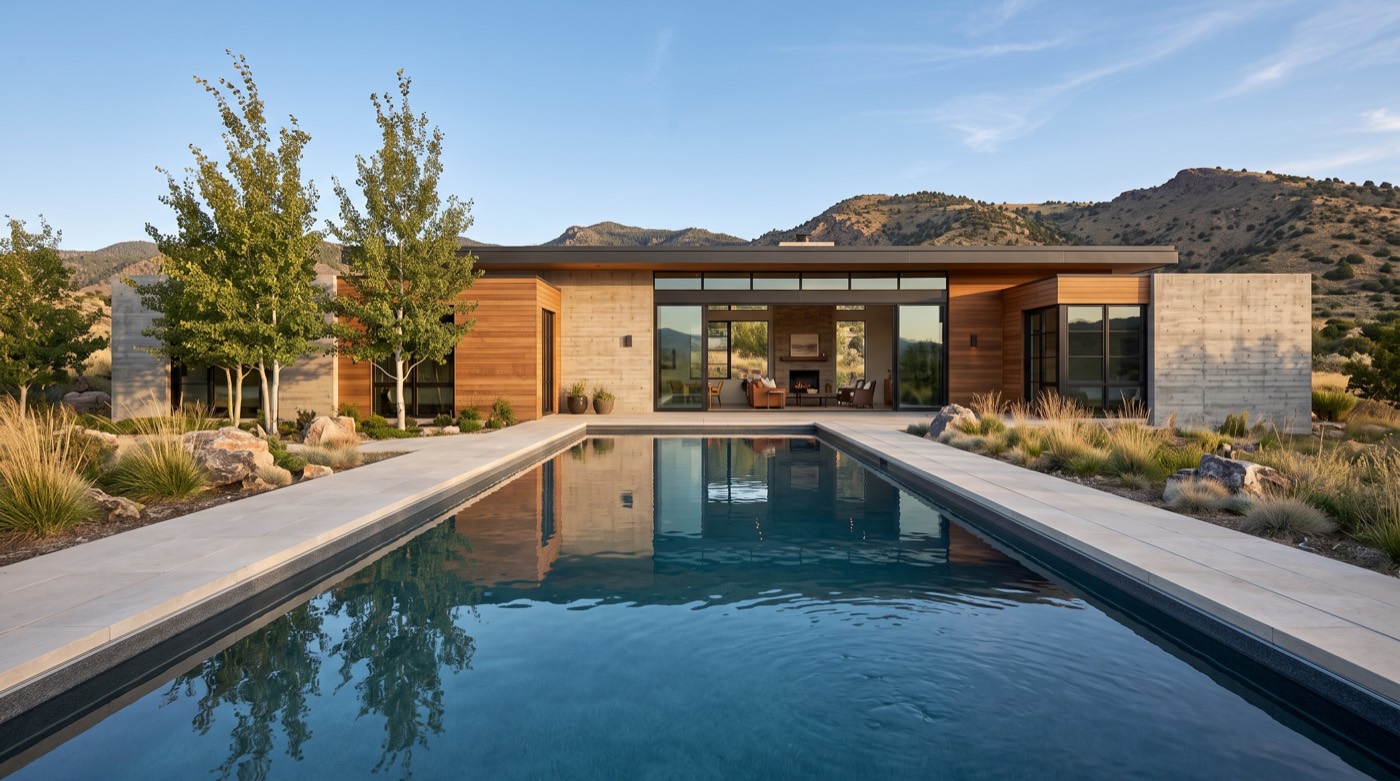
Custom salt water pools, designed and built around your home
Concept visualization
In brief
A salt water pool is an inground pool that makes its own chlorine from a small amount of dissolved salt. We design each one around the house, the site and the way you plan to use it, then build it for the ground and the climate it sits in.
A pool that belongs to the house
The best salt water pools do not look added on. They line up with a doorway, catch the afternoon light, and leave the right amount of terrace for the way a family actually sits outside.
That takes design before construction. We start with the site and the house: where the sun travels, what you see from inside, how the ground falls, where people will walk with wet feet. The shape of the water comes out of those answers. A long rectangle suits one property. A soft curve that follows a slope suits another.
Every pool we draw is custom. There is no catalogue of shells to pick from, and no standard size we are trying to sell you.
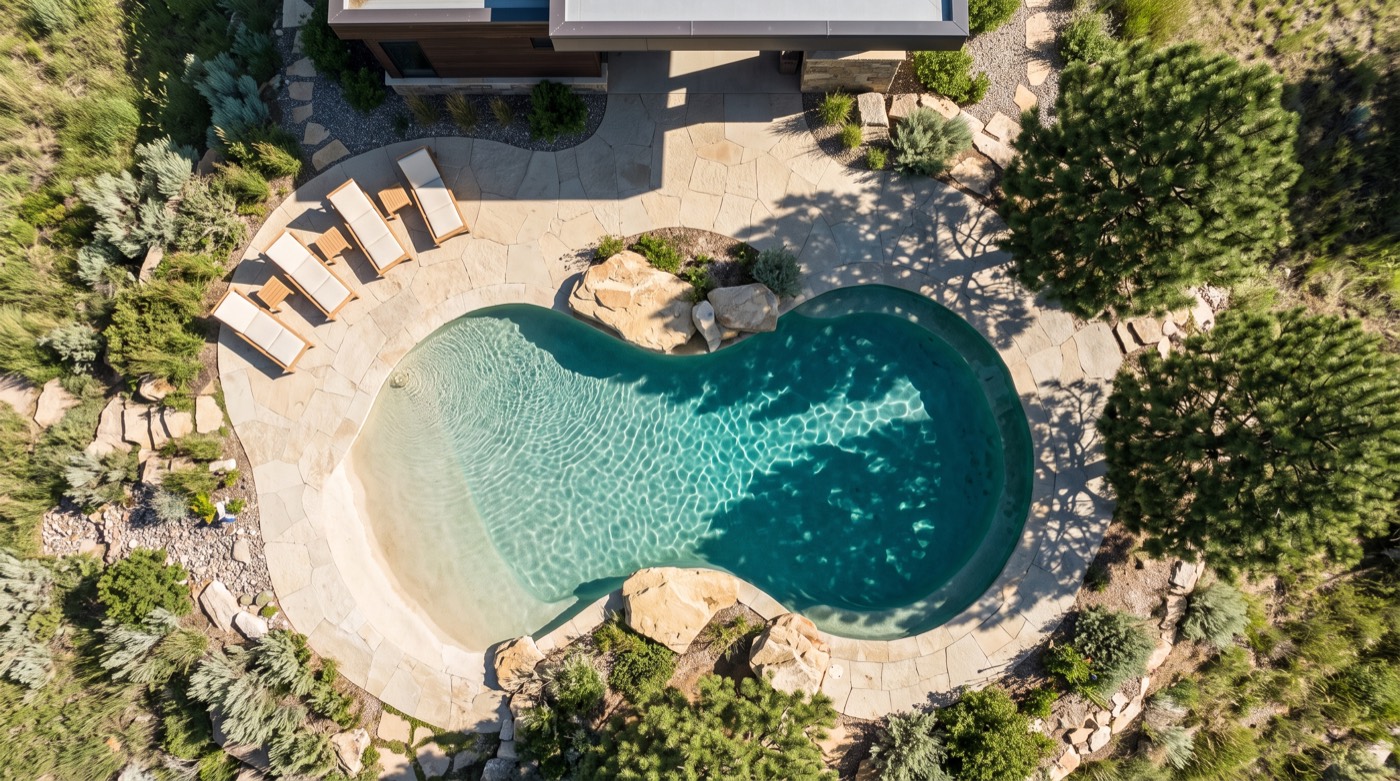
What goes into a salt water pool
Under the waterline, a salt water pool is built like any well-made inground pool. The difference is one piece of equipment and a handful of material choices.
- The structure
- A shell engineered for the soil it sits in. That might mean expansive clay and frost in one state, sand and a high water table in another.
- The interior finish
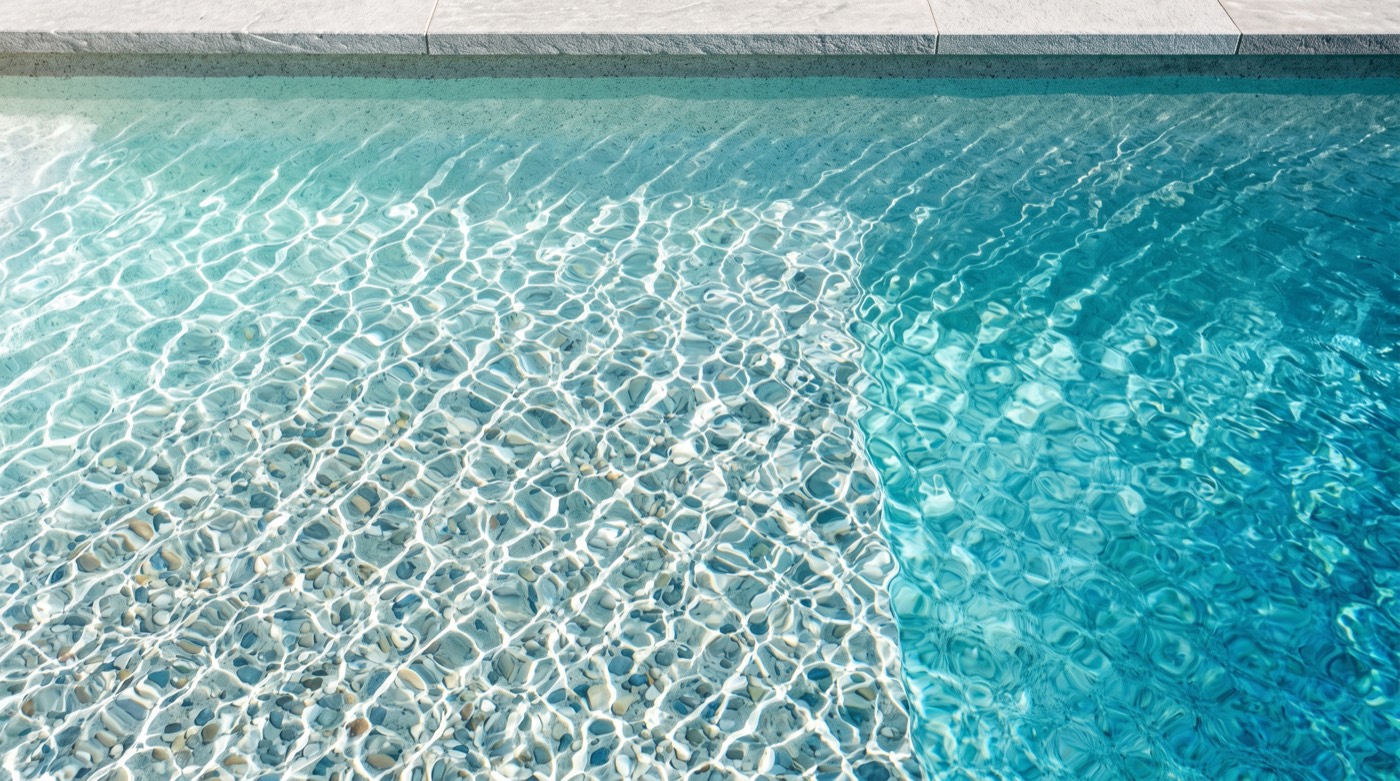
- Plaster, pebble or tile. It sets the colour of the water more than anything else, from pale aqua to deep blue-green.
- The salt system
- A salt chlorine generator sized for the volume of water, the sun it gets and how heavily the pool is used.
- Circulation and filtration
- Pump, filter and returns laid out so every part of the pool turns over, including steps, benches and shallow shelves.
- Heat and cover
- A heater matched to the pool, and a cover that keeps the heat and the water from leaving overnight.
- The edge
- Coping, tile and decking chosen to stand up to salt, sun and bare feet.
How the salt water part works
A salt water pool is a chlorine pool that makes its own chlorine.
Pool-grade salt is dissolved into the water at about 3,000 to 3,500 parts per million, roughly a tenth of the ocean. As water passes through the salt cell, a low electrical charge turns some of that salt into chlorine. The chlorine does its work and reverts to salt, and the loop runs again.
The result is a steady, low level of sanitizer and water that most people find softer on skin and eyes. You still test and balance it. You stop hauling buckets of tablets.
If you are weighing the two, our comparison of a salt water pool vs a chlorine pool sets them side by side, and the guide to how salt water pools work covers the chemistry in plain terms.
Built for where it sits
A pool designed for Tampa will struggle in Denver, and the reverse is just as true. Climate and ground change the brief.
- Strong sun. Ultraviolet light burns off chlorine, faster still at altitude and in the far south. The salt system and the stabilizer level are set with that in mind.
- Salt air and storms. On the coast, wind-driven salt and hurricane seasons decide the metals, the fixings and the cover.
- Dry air and cool nights. Evaporation takes water and heat together. In arid and high-country states a good cover is the single most useful accessory.
- Freeze and thaw. Where winters are hard, plumbing, equipment and the shell are detailed so the pool can be closed properly and come back in spring without surprises.
- The ground. Expansive clay, sand, rock or a high water table. Structure and drainage are engineered from a soils report, not from habit.
- The season. Heat, wind shelter and a built-in hot tub stretch the months you actually use the space. See the detail for your state.
Choices you will make along the way
None of these need an answer before you call. It helps to know they are coming.
- Shape
- Straight lines that echo the architecture, or a freeform edge that follows the land. If you lean toward the second, look at custom lagoons.
- Depth
- A sports pool that stays shallow, a deep end for diving in, or a mix with benches and a sun shelf.
- Entry
- Steps, a full-width bench, or a beach entry you walk into.
- Water colour
- Driven by the interior finish and the depth. Ask to see finishes wet and in sunlight.
- Features
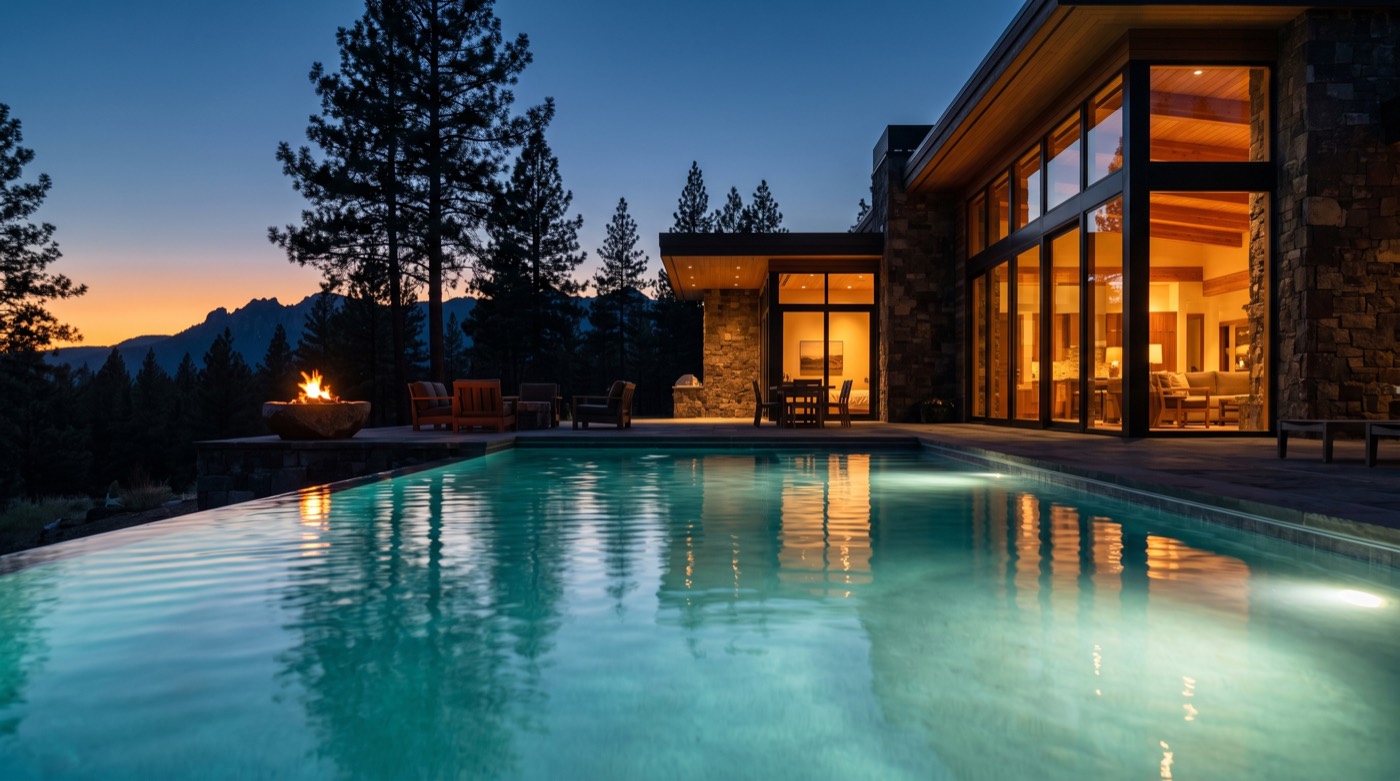
- A hot tub, a vanishing edge, lighting, fire. Each one earns its place or it is left out.
- Budget
- Our guide to salt water pool cost explains what moves the number.
Questions
Salt water pool questions
How long does it take to build a salt water pool?
It varies with design, permitting, soil and season, so any single number would be a guess. The honest answer comes after the site has been studied and the design is fixed. Our process page lays out the stages.
Can a salt water pool be heated?
Yes. A salt water pool uses the same heaters as any other pool, including gas heaters and heat pumps. In cooler climates most owners heat, and a cover does more than anything else to hold that heat overnight.
Can a salt water pool stay open in winter?
It can be kept running if it is designed for it, though in cold-winter states most pools are closed for the season. Salt cells stop producing chlorine in cold water, so a winter plan uses another sanitizing method or a proper closing.
Is salt water hard on the pool itself?
At pool levels, salt is mild, but it is still salt. The interior finish, coping, metal fittings and nearby stone should all be chosen with it in mind. That is a design decision, which is why we raise it at the start.
Can you add a hot tub or a beach entry?
Both are common. A built-in hot tub can share the pool's water and salt system, and a beach entry suits lagoon-style designs. See hot tubs and spas and custom lagoons.
Tell us about the property.
A first conversation costs nothing and usually settles more than a week of browsing.
Background: concept visualization