
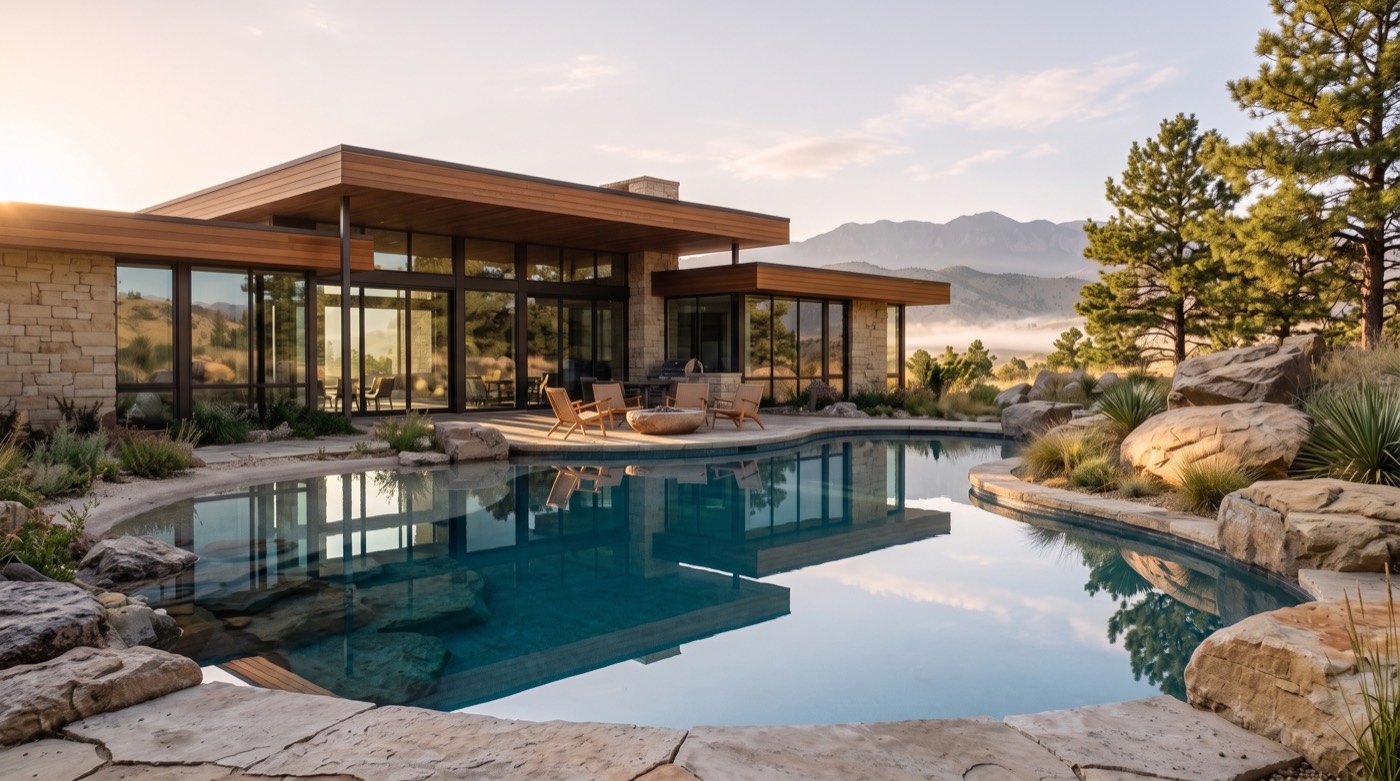
How a salt water pool is designed and built
Concept visualization
In brief
A custom salt water pool moves through six stages: conversation, site study, design, engineering and permits, construction, and first swim. Every property sets its own pace, so the sequence is fixed but the timing is not.
Six stages, in order
Building a pool is a long sequence of decisions. Taken in the right order they are straightforward. Taken out of order they are expensive.
-
Conversation
We start by listening. Who will use the pool, and how? Morning laps, children all afternoon, friends in the evening, a hot tub in the snow? What do you want to see from the kitchen window? What have you seen elsewhere that you liked or could not stand? There is no design yet, only a clear picture of what it is for.
-
Site study
Then we look hard at the ground. Levels and slope, soil, drainage, access for machinery, where the utilities run, how the sun and wind move across the property, and what the setbacks and local rules allow. On difficult ground, a soils report belongs here.
-
Design
Now the water gets a shape. Plans and sections show where the pool sits, how deep it is, how you get in, and how it meets the terrace and the house. Materials are chosen with salt in mind. Drawings are revised until they feel right, and only then priced.
-
Engineering and permits
The structure is engineered for the soil. Drainage, gas and electrical are worked out. Drawings go to the local authority for approval, and requirements such as safety barriers are built into the plan.
-
Construction
Excavation, steel, plumbing, the shell, tile and coping, decking, equipment, and finally the interior finish. The site sets the sequence. You are kept informed of what is happening and what comes next.
-
First swim
The pool is filled, salt is added, and the water is balanced. We walk you through the salt system, the controls and the cover, and leave you with a simple maintenance routine.
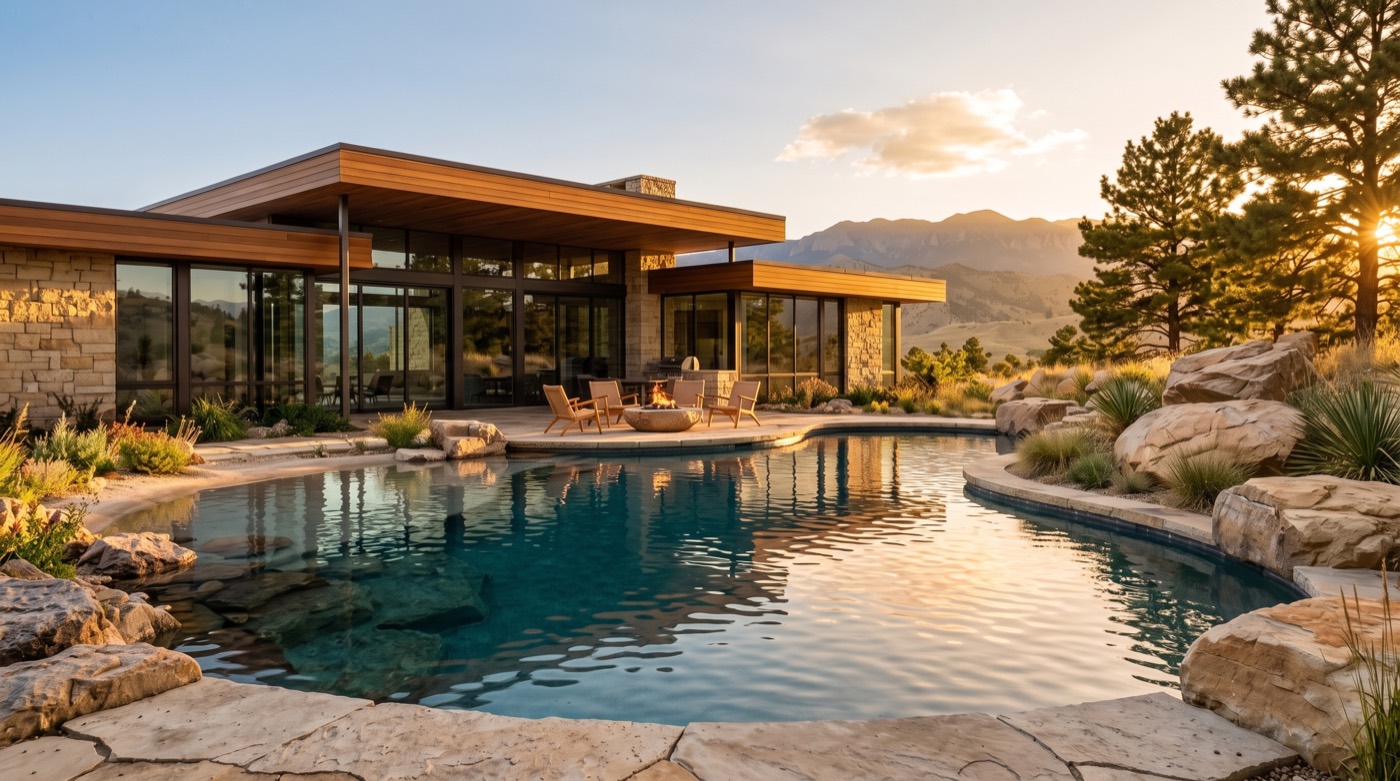
What we settle before anything is dug
Most problems with pools are decided in the first month and discovered in the third year. These are the questions we answer early.
- The ground
- What is under the pool, and how will the structure deal with it?
- The water
- Where does rain and snowmelt go, and how is it kept away from the shell?
- The sun and wind
- Where is the afternoon light, and what shelters the water from the breeze?
- The house
- Which rooms look onto the pool, and how do people move between them?
- The materials
- Will the stone, metal and equipment all tolerate salt?
- The winter
- How is the pool closed, covered and protected, or kept running?
Your part in it
A good project needs a client who is involved at the right moments and left alone the rest of the time.
- At the start. Tell us how you live, what you love and what the budget is. Being direct here saves weeks.
- During design. React honestly to drawings. Changing a line on paper is easy. Changing concrete is not.
- Before construction. Approve materials in person, wet and in sunlight where possible.
- During the build. Expect noise, machinery and a garden that looks worse before it looks better.
- At handover. Take the walkthrough seriously. An hour then saves a season of guesswork.
If you want to understand the money side before we speak, read our guide to what drives the cost of a salt water pool.
Questions
Process questions
How long does the whole process take?
It depends on the design, the permit office, the soil and the season. We would be guessing if we gave one number here. You will get a schedule for your project once the design is settled.
When is the best time of year to start?
Earlier than most people think. Design and permitting take time before any digging begins, so a conversation in autumn or winter gives the best chance of swimming the following summer.
Do I need my own architect or landscape designer?
No, though we are glad to work alongside one if you have them. Tell us who is involved and we will coordinate.
What do you need from me to begin?
A ZIP code, a rough idea of what you want and how you plan to use it. Photos and a property survey help if you have them.
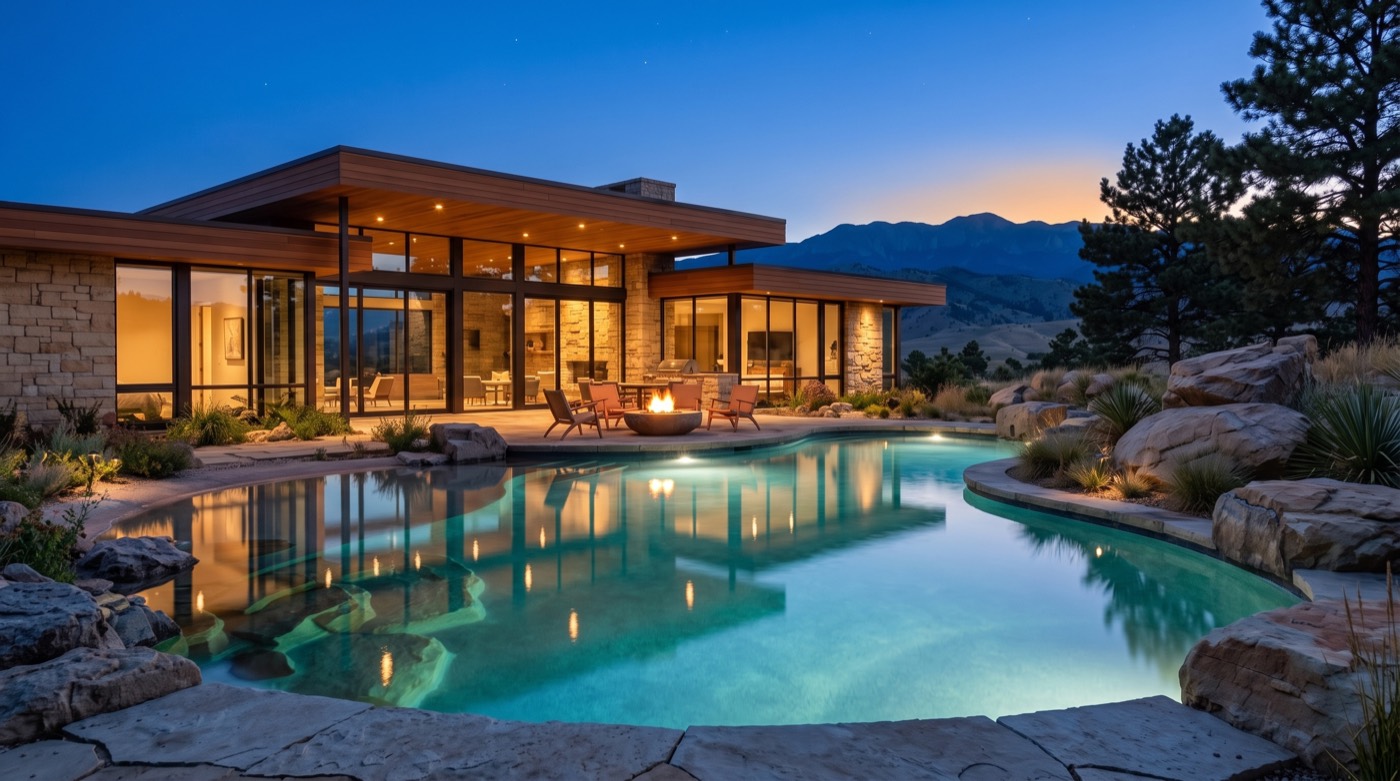
Stage one is a conversation.
It takes two minutes to send us the outline. We take it from there.
Background: concept visualization