
Salt water hot tubs and spas
Concept visualization
In brief
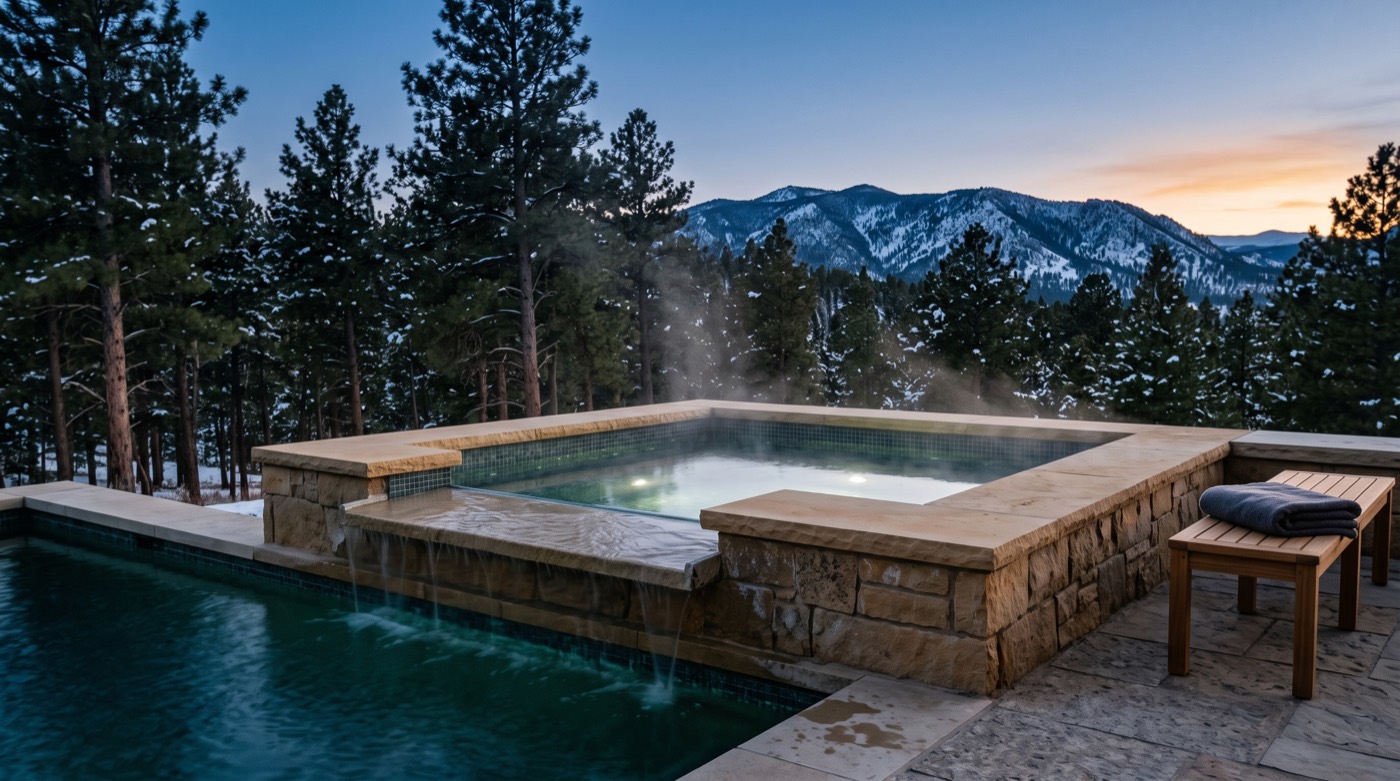
A built-in hot tub is a small, hot body of water constructed with the pool and finished in the same materials. It can share the pool's salt water and equipment, or run on its own, and in cooler climates it is often the most used part of the whole project.
The part you use in January
A pool has a season. A hot tub does not. On a cold, clear night it is the reason to go outside at all.
That is why we treat the hot tub as a room of its own, not an accessory bolted to a corner of the pool. Where it sits matters: close enough to the house for a short walk in a robe, sheltered from the wind, and turned toward whatever view the property has.
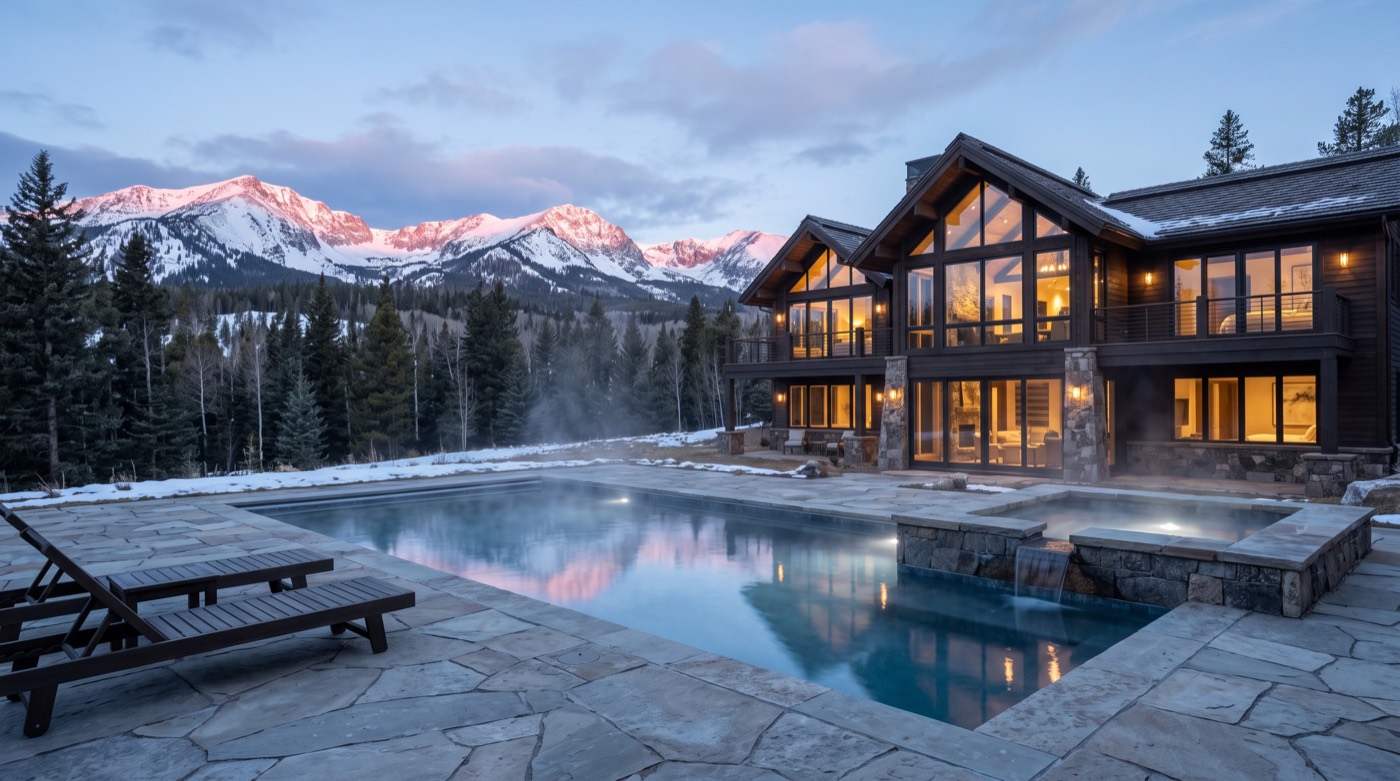
Built with the pool, it shares the same stone, the same tile and the same soft salt water.
Three ways to build one
The right type depends on how you will use it and what is already on the site.
- Spillover hot tub
- Raised beside the pool, with water falling over one edge into it. It shares the pool's water, salt system and heater. The sound of the spill is a feature in itself.
- Flush or hidden
- Set level with the pool or within it, separated by a submerged wall. Quiet to look at, and well suited to modern architecture.
- Standalone
- Built on its own, away from the pool or without one. It has its own equipment and can be placed wherever the view and the shelter are best.
How a salt water hot tub works
The principle is the same as the pool. The conditions are tougher.
A salt cell turns dissolved salt into chlorine as the water circulates. In a spillover design, that is the pool's own salt system, and the hot tub is simply part of the loop.
Hot water changes the arithmetic. At 102 degrees, sanitizer is used up faster, a few bathers in a small volume make a large demand, and calcium comes out of solution more readily, which shows up as scale. So the water is tested more often, and the controls let you run the tub separately when you want it hot without heating the whole pool.
The general approach to testing and balancing is covered in our guide to salt water pool maintenance.
Details that decide whether it gets used
- The walk. Every extra step from the door is a reason to stay inside in winter. Short, lit and clear of snow wins.
- The seats. Bench heights and depths are set for real people. A mix lets tall and short sit comfortably.
- The jets. Placed for backs, calves and feet, and few enough that conversation is still possible.
- The cover. An insulated cover holds heat and keeps the running cost sensible. Automatic covers get used. Heavy ones do not.
- Heat-up time. Controls that start the tub from your phone mean it is ready when you are.
- Wind and privacy. A low wall, planting or the house itself, used to shelter and screen.
Questions
Hot tub questions
Can a hot tub use salt water?
Yes. A hot tub connected to a salt water pool is sanitized by the same salt system. A standalone tub can have its own salt system, sized for a much smaller volume of hot water.
How hot should a hot tub be?
Most people settle between 100 and 102 degrees Fahrenheit. The US Consumer Product Safety Commission advises never going above 104.
Can you use a hot tub all winter?
Yes, and in cold-winter states many owners use it more in winter than in summer. It needs a well-fitted insulated cover and equipment that is protected from freezing.
Does a hot tub need separate equipment from the pool?
Not always. A spillover hot tub can share the pool's pump, filter, heater and salt system, with valves that switch between pool mode and spa mode. Larger or standalone tubs often get their own.
Is hot salt water harder to look after?
It needs closer attention. Hot water uses sanitizer faster and scale forms more easily, so chlorine, pH and calcium are checked more often than in the pool.
Snow on the ridge, steam on the water.
Tell us how you picture using it and we will help you decide where it goes.
Background: concept visualization