
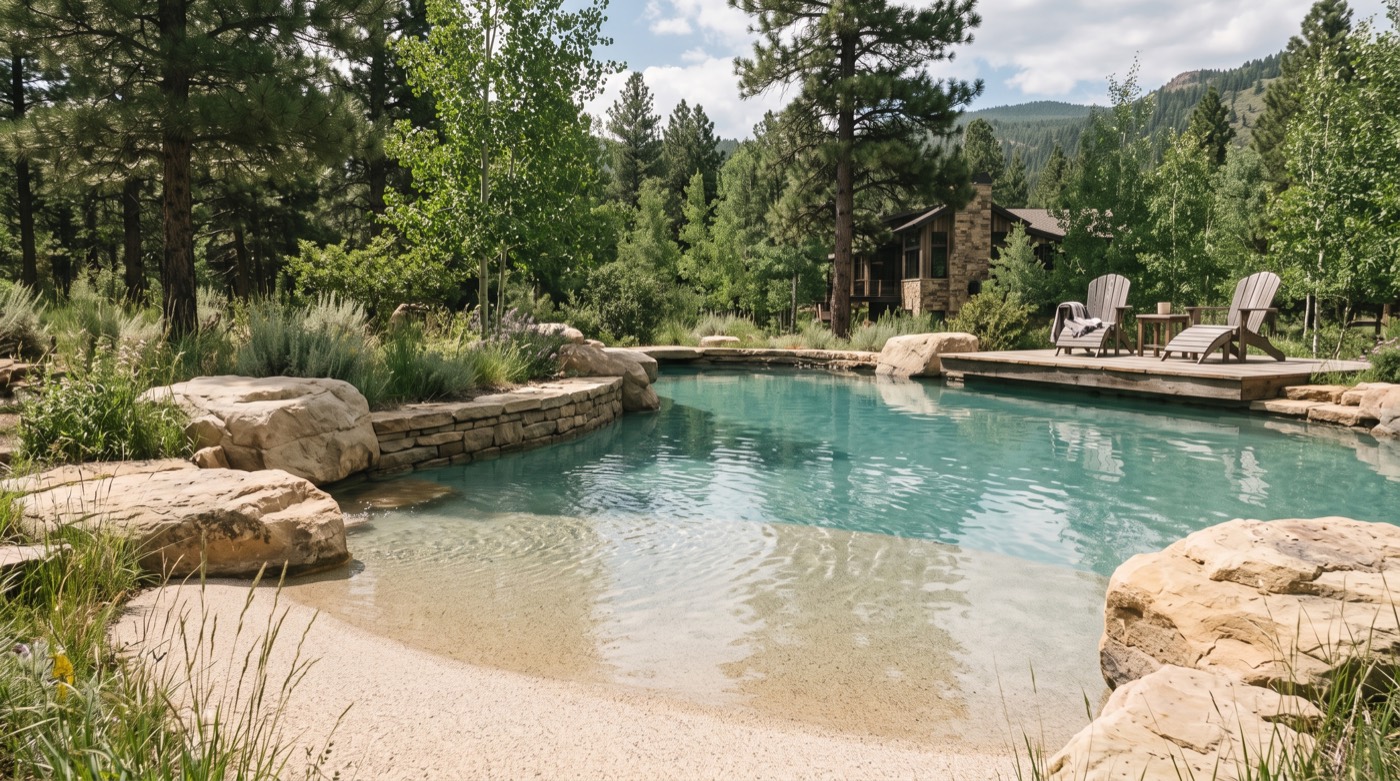
Custom salt water lagoons for private homes
Concept visualization
In brief
A lagoon is a salt water pool shaped like a natural body of water. It has curved edges, a gradual walk-in entry and stone and planting brought right to the waterline, so it reads as part of the landscape.
Water you walk into
A lagoon changes how you arrive at the water. There is no ladder and no edge to sit on first. The ground slopes away, the water gets deeper, and you are in.
That one idea shapes everything else. The shallows become a place to sit with a drink or let small children play. The deeper water sits further out, darker and cooler. Stone and planting come down to meet the edge, so from the house the whole thing looks as if it was found and the home was built beside it.
We build lagoons as salt water pools, which suits them. The water feels soft, and there is none of the sharp smell that would break the illusion.
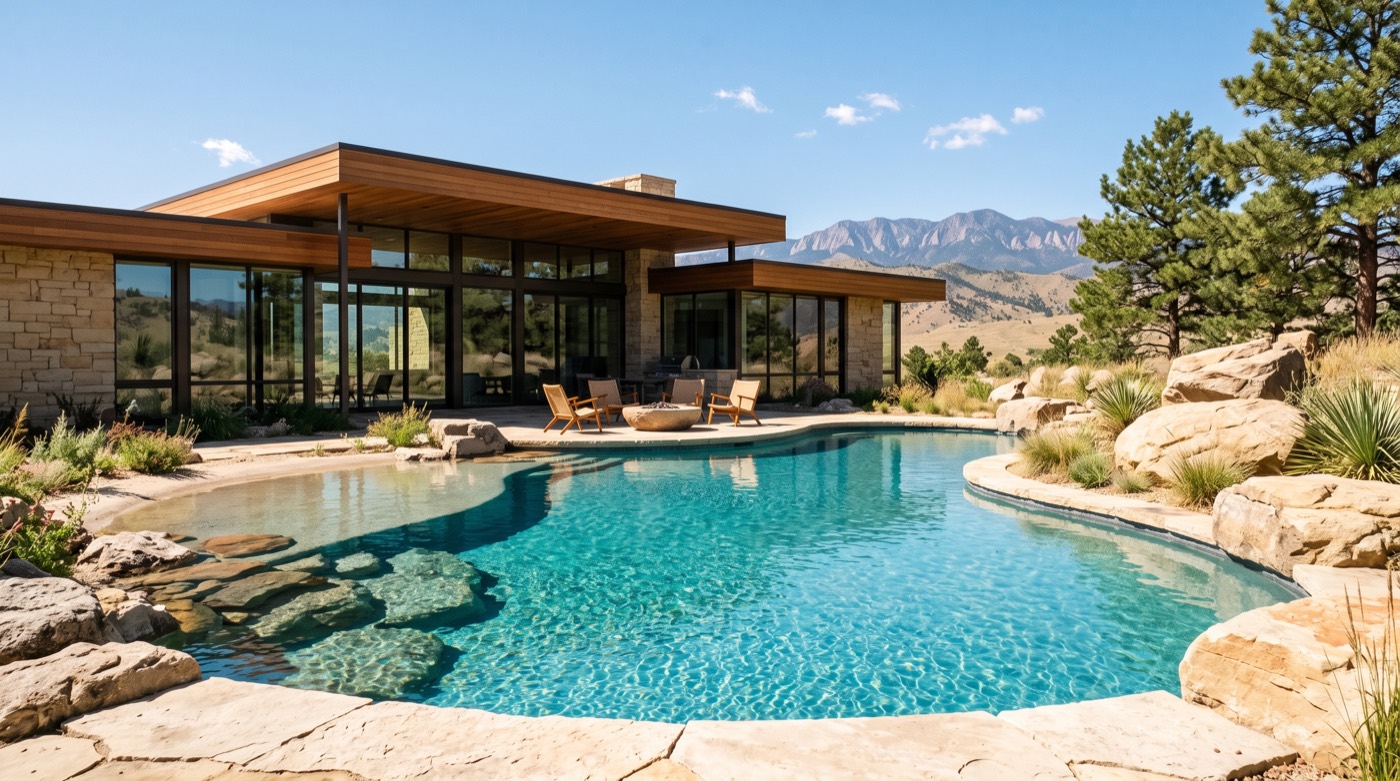
The parts of a lagoon
Four things separate a convincing lagoon from a curvy pool.
- The beach entry
- A long, gentle slope from dry ground to swimming depth, finished in a pale, textured surface that grips underfoot.
- The edge
- No continuous band of coping. Boulders, ledges and planting interrupt it, and in places the terrace runs straight to the water.
- The depth
- Varied on purpose. Colour shifts from pale sand to deep blue-green as the floor drops away, the way it does in open water.
- The setting
- Planting and stone that belong to the region. Sandstone and pines in the mountain states, coral stone and palms on a southern coast.
What a lagoon asks of the design
Lagoons look relaxed. Building one that stays clear and comfortable is exacting work.
- Circulation in the shallows. Warm, shallow water is where algae would start. Returns are placed to keep it moving.
- More surface, more evaporation. A wide, shallow lagoon loses heat and water faster than a compact pool. In dry or windy climates, a cover strategy is part of the design from day one.
- Stone that tolerates salt. Some soft stone breaks down beside salt water. Boulders and ledges are chosen and sealed with that in mind.
- Safe footing. The beach slope and its finish are designed so the entry is easy for every age.
- Barriers and codes. Fencing and safety requirements vary by municipality and apply to lagoons as they do to any pool.
If the practical side is what you want to understand first, start with salt water pool maintenance.
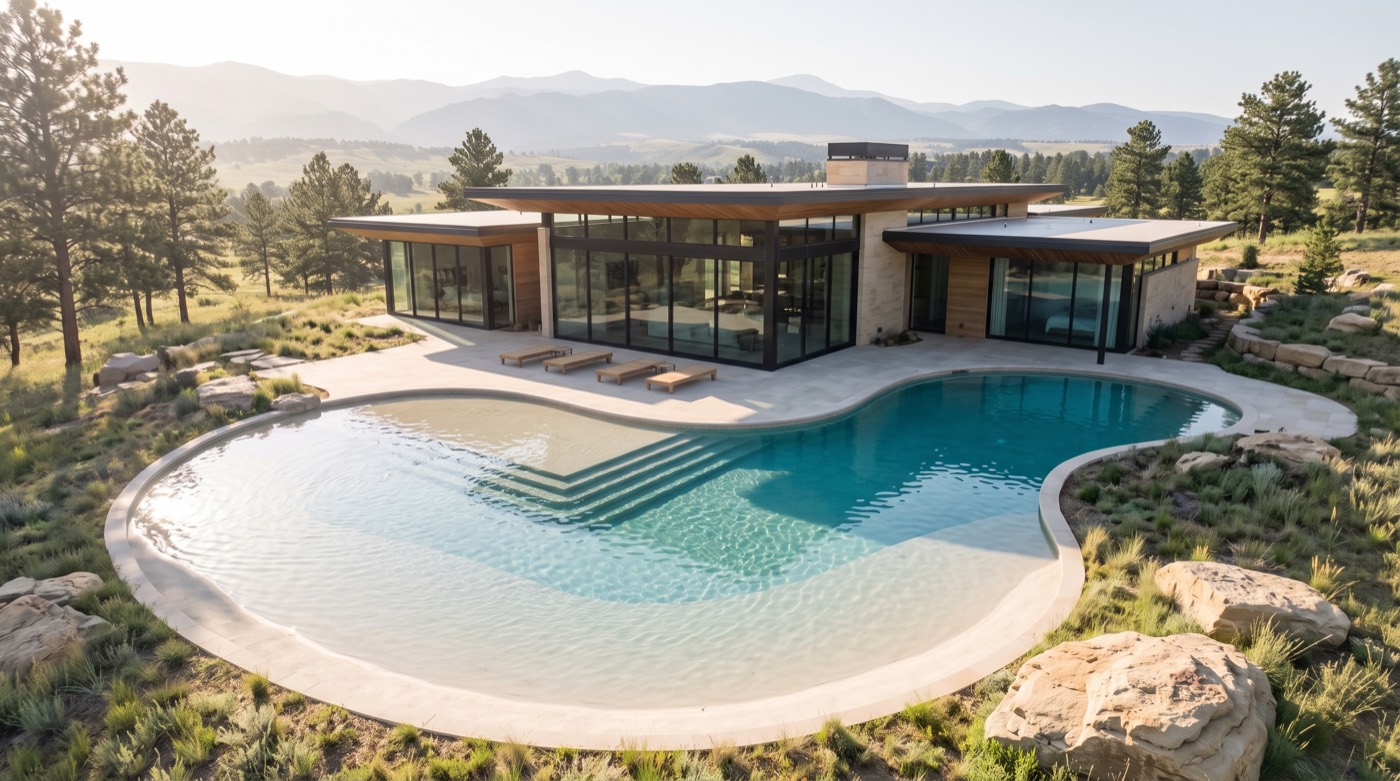
Is a lagoon right for your property?
A lagoon is the right answer on some sites and the wrong one on others. A few honest tests help.
- You have room
- A beach entry and curved edges need space. Tight urban lots usually suit a rectilinear pool better.
- The land has character
- Slopes, trees and rock give a lagoon something to respond to. On a flat, bare lot the landscape has to be built too.
- You want to linger
- Lagoons are for wading, sitting and floating. If you swim laps, add a straight run or choose a different shape.
- The house can take it
- Naturalistic water sits easily beside mountain, ranch and organic modern homes. Beside strict minimalism it needs a careful hand.
Questions
Lagoon questions
What is the difference between a lagoon and a pool?
Structurally, very little. A residential lagoon is a custom pool with a freeform shape, a beach-style entry and naturalistic edges. The difference is in how it is designed to look and how you get into it.
Is a lagoon filled with sand?
Usually not. Loose sand is hard on filters and pumps. The beach look normally comes from a sand-coloured textured finish on a gently sloping entry, which gives the same pale shallows without the upkeep.
Does a lagoon need more maintenance than a pool?
A little more attention. Shallow areas warm up and use chlorine faster, and a larger surface collects more leaves. A correctly sized salt system and good circulation through the shallows handle most of it.
How much space does a lagoon need?
More than a rectangle holding the same amount of water, because a walk-in entry and curved edges take room. It is the first thing we check on a site visit.
Can a lagoon have a hot tub?
Yes. A built-in hot tub tucked into the rockwork is one of the most used parts of a lagoon once the evenings cool.
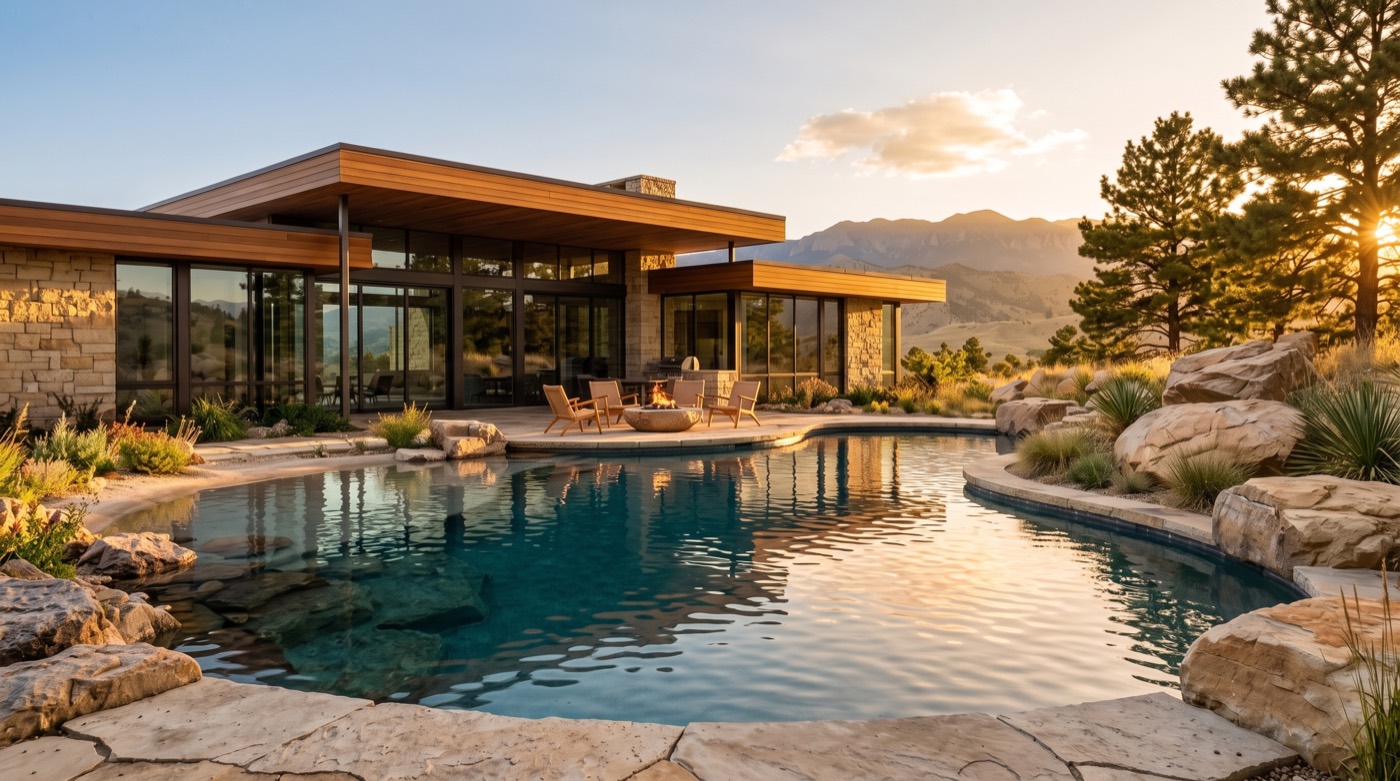
Picture it on your land.
Send us the ZIP code and a few lines about the property. We will tell you honestly whether a lagoon suits it.
Background: concept visualization